How to go From Prompts to Software in 2027
Software from prompts is moving from demo to daily use. Here is what non-technical people can expect by 2027, and where human judgment still matters.
For most of the last twenty years, the word "non-technical" has meant one thing, and that is that you cannot build software. This label has done a lot of work, because it has decided who gets to turn ideas into real products, and it has also decided who has to wait for someone else to do the building. If you were not on the developer side of the wall, you only had three options, which were to learn to code, to hire someone, or to let the idea quietly die in your notes app.
That wall is finally coming down, because in 2027, "non-technical" will no longer mean "I cannot build." Instead, it will mean "I can describe what I need," since software can now be shaped by conversation, and the ability to describe something clearly is much closer to the ability to build it than most people realize.
Why the old meaning is breaking
For a long time, the distance between having an idea and having a working product was very wide, because most of that distance was made of code and setup.
Think about a founder who understood her customers perfectly. She still had to find a developer, agree on a spec with him, and wait weeks for a first draft, only to discover halfway through that what she really wanted was not what she had asked for. Or think about a shop owner who knew exactly how he wanted bookings to work, yet had no way to test his idea without hiring someone first, so the idea just sat in a notebook, where it never came alive.
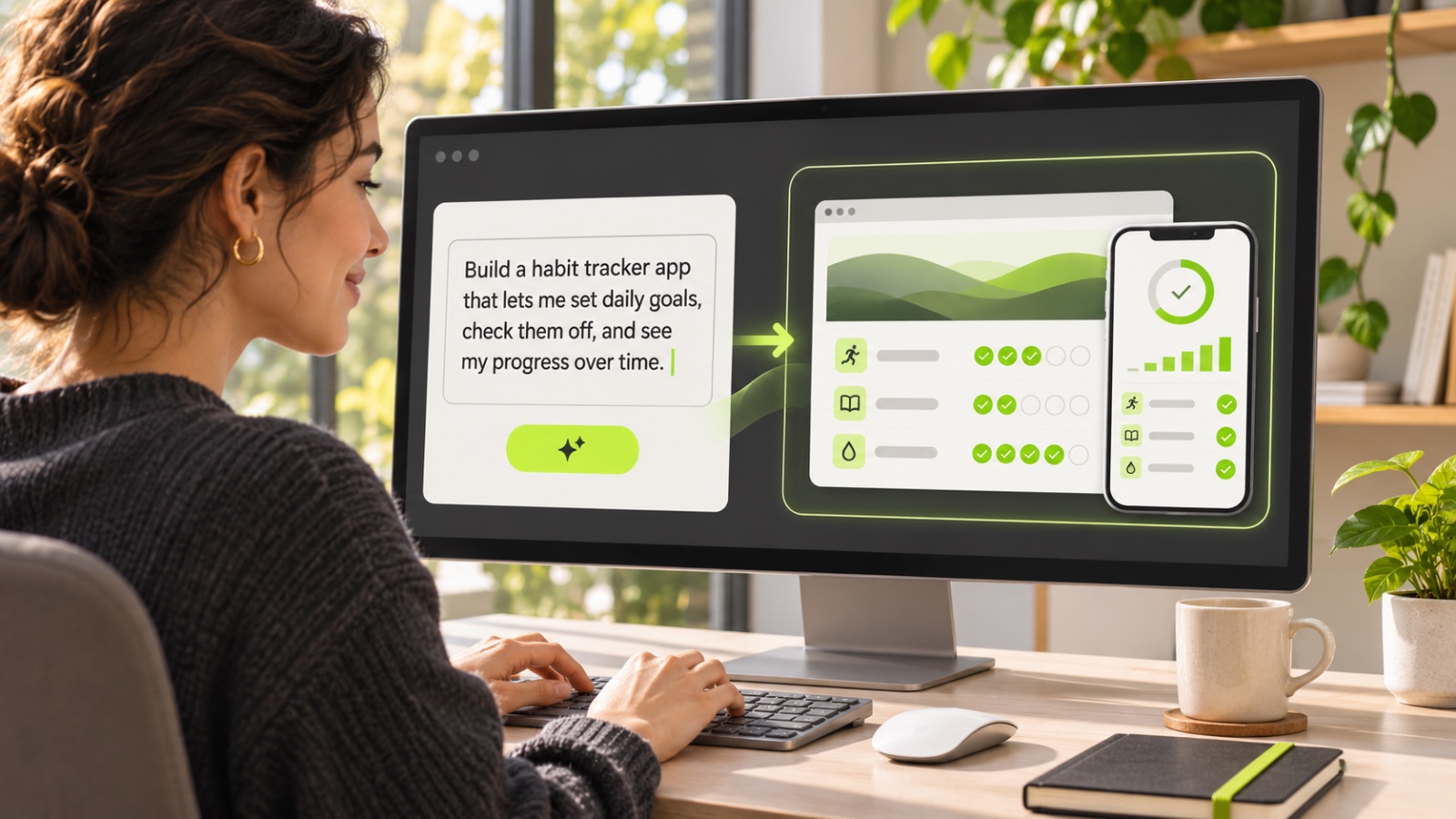
Things are different now, because today that same founder can describe her product in plain words and watch a working version appear, while the same shop owner can build a storefront in less than two minutes. The wait is gone, and the first step belongs to them again.
What "plain-English building" actually looks like
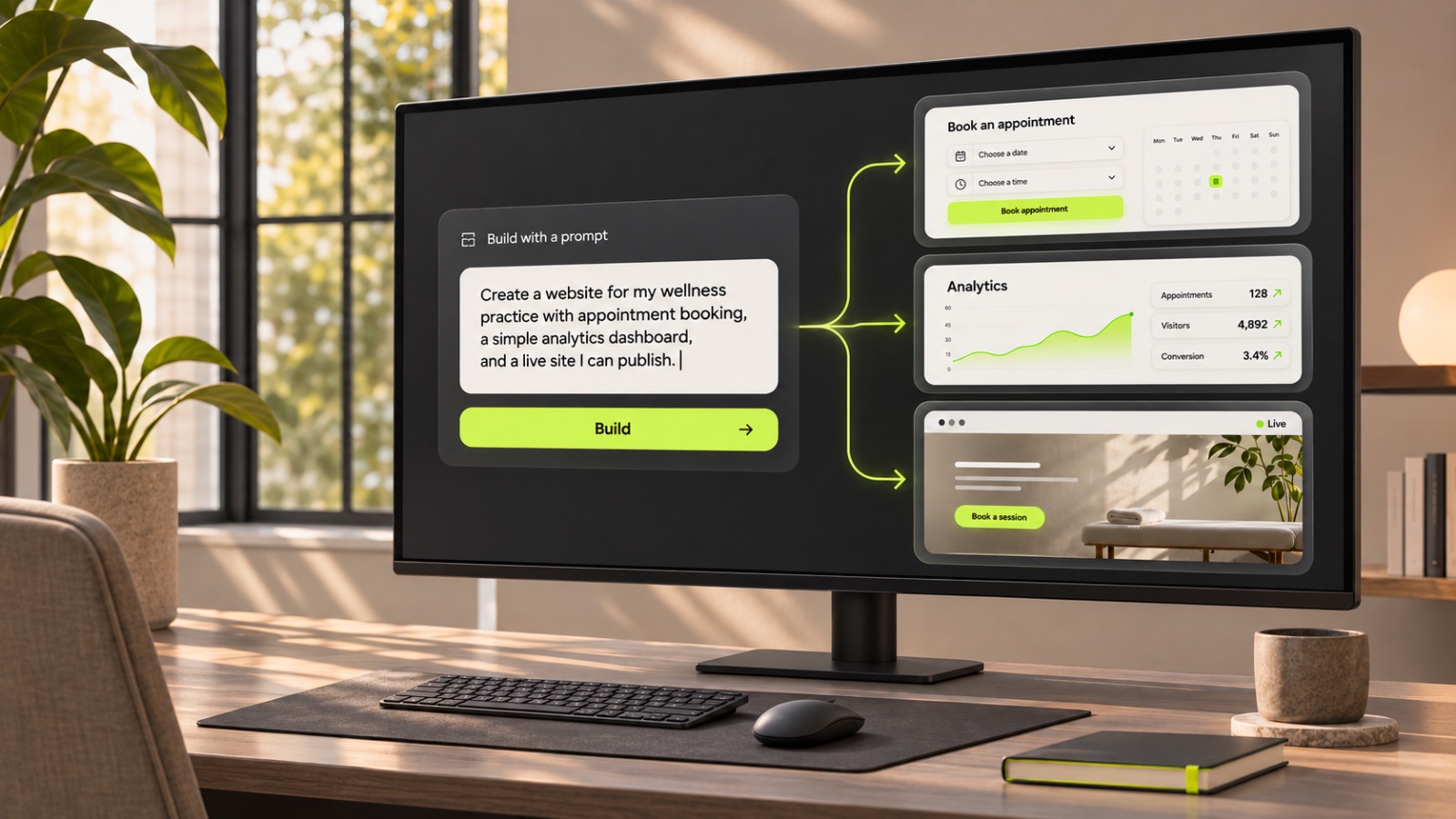
The phrase can sound abstract until you actually try it, so let me walk you through an example. Imagine a small caterer who wants a booking page for her business. In the old version of this story, the process would take three months, because she would have to find a developer, pay a deposit, send references, review drafts, wait for changes, follow up, and finally launch. In the new version, however, the whole thing takes an afternoon.
She opens an AI app builder and simply types what she wants:
"A simple site for my catering business. One page about me, and one page where customers can book a date. The booking form takes their name, phone number, and event details, and it saves everything to a database I can check later."
Then she presses build, and a few minutes later, there is a working site. It is not perfect, of course, since the hero image is a little generic, the fonts are slightly off, and the thank-you page still needs a line telling customers when she will reply. Still, the site is real, it is live, and it is ready for her to show to the first five people who matter.
That is the whole shift in one example, because the first draft used to be the hardest thing to get to, now it is the easiest.
What this unlocks for people who do not code
The interesting part is not just that the caterer can build a site, because the interesting part is everything that happens after that. Since the first version is cheap and fast, she can keep trying things. For example, she can ship one version on Monday, ask her regulars what they think, and then ship a better version by Friday. She can test a new offer without committing to a full redesign, and she can launch before she feels fully ready, which is actually how most good products start anyway.
The same is true for many other people, including a founder with a product idea, a team lead who needs an internal tool, a creator who wants a landing page, or a teacher who wants a quiz app. The thing they all have in common is not technical skill, but rather the ability to describe a need clearly and to keep improving the result that comes back. For people who have lived on the non-technical side of the wall for a long time, this is new ground, because the question they ask is finally changing. It used to be, "Who can build this for me?", now it is becoming, "What do I actually want?"
Where humans still matter
None of this means that human judgment matters less, because if anything, it means that judgment matters more than ever. A tool can produce a first draft, yet there are many things it cannot do. It cannot tell you whether you are solving the right problem in the first place, nor whether the thing you built is worth charging money for. It also cannot tell you whether the user experience truly feels good in a real customer's hands, or whether the logic is safe enough to run on real money. All of those decisions still belong to a person.
So "non-technical" does not become "careless," but rather something closer to "responsible for the decisions a developer used to shield me from." You still have to review what the software does before real people touch it, and you still have to decide what is worth shipping. You also have to know when your project has grown bigger than a prompt, which is the moment when the stakes have risen and when it is time to bring in someone who can go deeper.
What this means for teams
This shift is not just about solo founders, because it is also about how small teams work together. When first drafts come quickly, the bottleneck inside a team begins to move, since the old question used to be, "Who can build this?", while the new question is, "What should we build?" The product manager who understands the customer best, the ops lead who knows which internal tool is wasting hours every week, and the founder who can see where the business should go next can all finally stop waiting in line. They can test their own ideas, bring working prototypes to the team, and shift the conversation from "Is this possible?" to "Is this right?"
Developers do not disappear in this picture, because in fact, they go further than before. Since the easy scaffolding; the forms, the authentication screens, the basic CRUD is now handled by tools, engineering time is freed up for the work that genuinely needs engineering, which includes hard problems, real scale, custom logic, security, and performance. These are the things that make a product truly worth trusting, and honestly, that is a much better use of a developer's skill than copy-pasting a login screen for the thousandth time.
So the future is not "no developers," but simply a future where more people can start building their ideas themselves, while the best developers can go further than before.

What this means for you
If you have carried the "non-technical" label for a while, then this is the shift you should watch closely, because the next skill worth building is not coding, although a little bit of coding never hurts. The real skill is clarity, since the people who will build the most in 2027 are the ones who can describe what they want precisely, read what a tool gives them back honestly, and keep refining the result until it is finally real.
If you have an idea sitting in your notes app right now, the next step is smaller than it used to be. First, write the idea down the way you would explain it to a friend, and then open an app builder that can turn prompts into live projects. After that, build the smallest possible thing, show it to five people whose opinions you trust, and then fix what they tell you to fix.
That is how the wall comes down, though it does not come down all at once, nor for everyone, nor certainly in a perfect way. Still, for anyone who is willing to describe what they want and improve on what comes back, the distance between an idea and a working version of that idea has never been shorter.
For twenty years, "non-technical" has meant "cannot build software," but in 2027, it will more likely mean "builds differently."
Questions and answers
Will software from prompts replace coding by 2027?
Probably not completely. Software from prompts will make many simple apps much faster to create, but coding will still matter for complex systems, unusual business rules, and deep customisation. By 2027, the bigger change may be that more people can start with prompts first and only bring in code when needed.
Can non-technical people really build apps with AI?
Yes, many non-technical people can build useful first versions with AI, especially for simple tools like forms, booking flows, dashboards, and small business sites. The key is to start with a clear problem and a small scope. The AI helps create the draft, while the person guides the goal and checks the result.
What kind of apps can you make from a prompt?
You can often make apps with clear structure and repeatable steps, such as customer intake forms, appointment booking apps, internal dashboards, simple marketplaces, and admin tools. These work well because their features are easier to describe in plain language. Very complex apps usually need more review and setup.
How good is prompt based software for real businesses?
Prompt based software can be very useful for real businesses, especially for testing ideas, launching early versions, and handling straightforward workflows. It is often best for speed and flexibility. For more sensitive or complex use cases, businesses should still test carefully and make sure the app fits their rules and process.
What skills will non-technical founders still need in 2027?
Non-technical founders will still need product thinking, clear communication, and the ability to test what they build. They will need to explain the problem well, choose the right first version, and notice when the app does not match user needs. Good judgment will still matter more than knowing code.